


Long-haul flights are more comfortable when you plan. Pack smart, choose the right seat, stay hydrated, move regularly, and adjust your sleep schedule before departure. These flight travel tips can significantly reduce fatigue, jet lag, and discomfort on any international journey.
Long-haul flights are a test of patience, preparation, and physical endurance. Whether you’re crossing the Atlantic or flying 14 hours to Southeast Asia, the experience can range from surprisingly manageable to utterly exhausting—depending almost entirely on how well you prepare.
Most travelers board a long flight hoping for the best without a clear plan. They arrive tired, stiff, dehydrated, and jet-lagged. The good news? That doesn’t have to be your story. A little preparation before you step onto the plane makes an enormous difference in how you feel when you land.
This guide covers everything you need to know: how to stay comfortable, what to pack, where to sit, what to eat, how to sleep, and how to protect your health across thousands of miles of airspace. Whether this is your first international flight or your fiftieth, these practical flight travel tips are designed to help you arrive feeling human.
How to Stay Comfortable on a Long-Haul Flight
Comfort on a long-haul flight doesn’t happen by accident. It’s the result of deliberate choices—what you wear, what you bring, and how you manage your body over many hours in a pressurized metal cabin.
Dress for the Cabin, Not the Destination
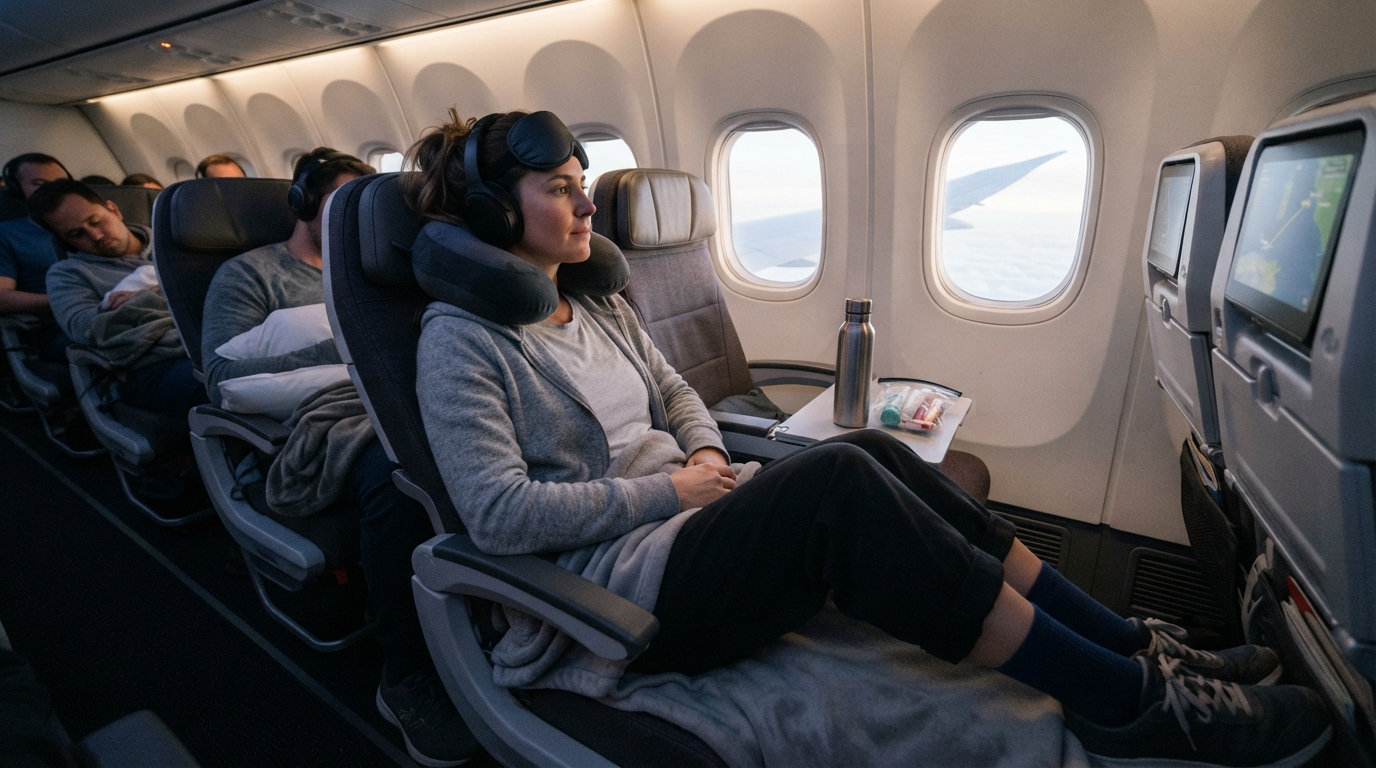
Airplane cabins fluctuate in temperature. One hour you’re sweating, the next you’re reaching for a blanket. Wearing loose, breathable layers—think soft joggers, a light long-sleeve top, and a zip-up hoodie—gives you flexibility. Avoid tight waistbands, stiff jeans, or restrictive footwear. Compression socks are worth every cent; they improve circulation and reduce swelling in your feet and ankles.
Move Your Body Regularly
Sitting still for 10+ hours increases your risk of deep vein thrombosis (DVT), a condition where blood clots form in the legs. According to the World Health Organization (WHO), the risk of DVT roughly doubles on flights lasting four hours or more. Stand up, walk to the back of the plane, and stretch every 1–2 hours. Simple ankle circles and calf raises in your seat also help keep blood flowing.
Stay Hydrated—Aggressively
Cabin air humidity typically hovers between 10–20%, far below the 30–60% humidity most people are used to on the ground. This dryness accelerates dehydration, which worsens fatigue, headaches, and brain fog. Drink water consistently throughout the flight—at least 8 ounces per hour. Avoid excess alcohol and caffeine, both of which accelerate fluid loss.
Protect Your Skin
Dehydration doesn’t just affect how you feel internally—it shows on your skin. Pack a small moisturizer and apply it mid-flight. Lip balm, a travel-size face mist, and eye drops (especially for contact lens wearers) make a noticeable difference by the time you land.
What to Pack for a Long-Haul Flight
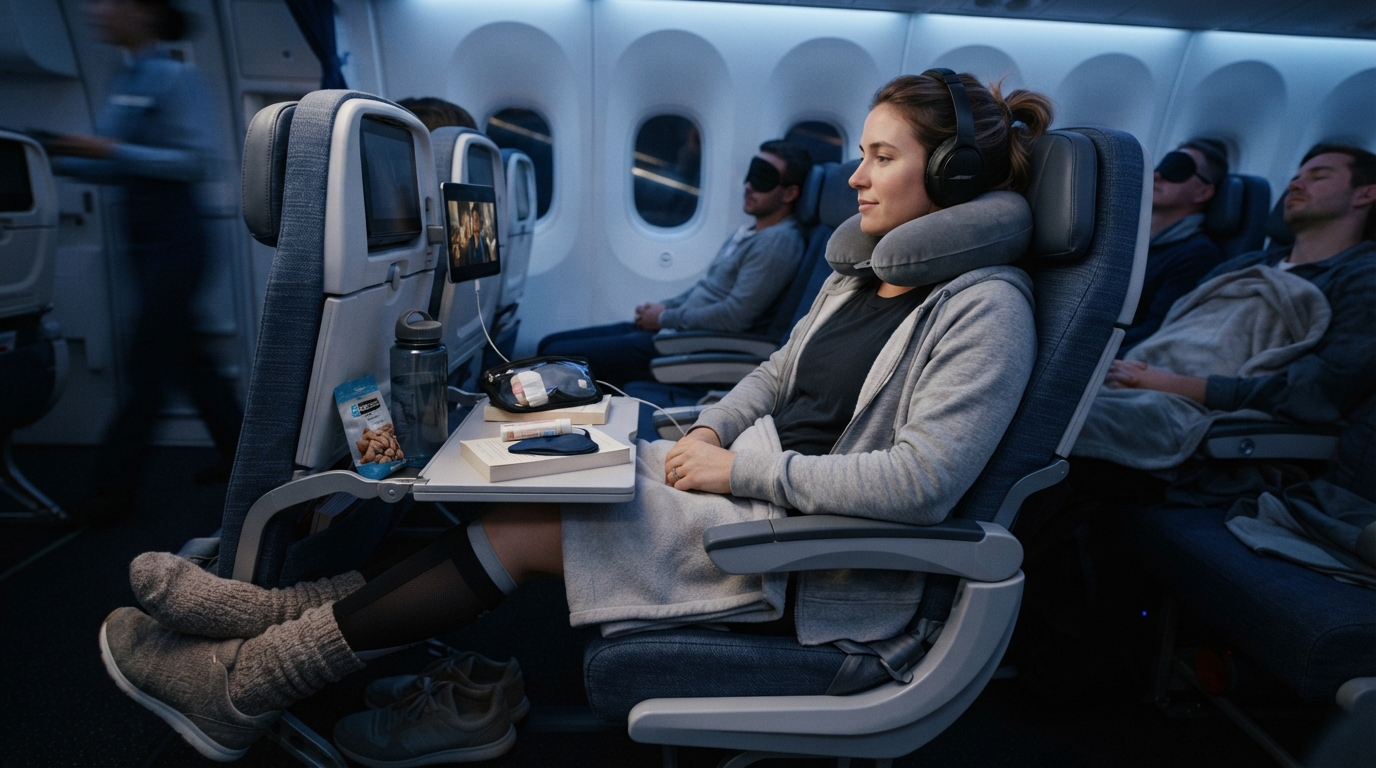
Smart packing is one of the most impactful flight travel tips in this entire guide. Your carry-on isn’t just luggage—it’s your survival kit for the next 10–16 hours.
The Non-Negotiables
These are items that consistently separate comfortable flyers from miserable ones:
|
Item |
Why It Matters |
|---|---|
|
Noise-canceling headphones |
Reduces engine noise fatigue significantly |
|
Neck pillow (memory foam) |
Prevents neck stiffness and supports sleep |
|
Eye mask |
Blocks cabin lights for better sleep quality |
|
Compression socks |
Improves circulation and reduces leg swelling |
|
Reusable water bottle |
Refill after security to stay hydrated |
|
Lip balm and moisturizer |
Combats extreme cabin dryness |
|
Portable charger |
Keeps devices running on long hauls |
|
Earplugs |
Backup for noisy cabins or snoring neighbors |
|
Healthy snacks |
Airlines don’t always serve food when you’re hungry |
|
Change of clothes |
Essential for connecting flights or delays |
What to Wear vs. What to Pack
There’s a difference between wearing your compression socks on the plane and packing a second pair for your bag. Think strategically. Items like your neck pillow and headphones should be immediately accessible—not buried in overhead storage.
Entertainment Essentials
Download movies, podcasts, e-books, or offline playlists before you fly. In-flight entertainment is hit-or-miss depending on the airline, and Wi-Fi is often slow or expensive. A fully loaded tablet or laptop removes the risk of a 12-hour entertainment blackout.
How to Sleep on a Long-Haul Flight
Sleep is arguably the single most important factor in arriving refreshed. Yet most people struggle to get even a few decent hours in economy. These flight travel tips on in-flight sleep are backed by behavioral science and sleep research.
Align Your Sleep with the Destination Time Zone
Before you board, start shifting your sleep schedule toward your destination’s time zone. If you’re flying from New York to London, try going to bed an hour or two earlier for a few nights before departure. This reduces the shock to your circadian rhythm.
Create the Right Sleep Environment
A dark, quiet, slightly cool environment is optimal for sleep—recreate this in your seat. Use your eye mask to block light, earplugs or noise-canceling headphones to reduce sound, and ask the flight attendant to lower the temperature if it’s too warm. Recline your seat fully (when it’s appropriate and considerate to do so) and use a blanket to stay warm.
Consider Sleep Aids Carefully
Melatonin is a commonly used, low-risk option for resetting your internal clock during long-haul travel. According to research published in the Cochrane Database of Systematic Reviews, melatonin is effective for preventing and reducing jet lag, particularly for eastbound travel. Consult your doctor before using prescription sleep aids; many suppress REM sleep and can leave you groggier than before.
Avoid the Temptation of In-Flight Entertainment
It’s easy to spend the first four hours watching movies and then wonder why you can’t sleep. Set yourself a cut-off: watch one film, then switch to sleep mode. Use your headphones to listen to white noise, sleep sounds, or a calm podcast instead of a thriller.
How to Avoid Jet Lag After a Long Flight
Jet lag is your body’s protest against rapid time zone changes. Your circadian rhythm—the internal 24-hour clock governing sleep, hunger, and energy—doesn’t adjust instantly. But with the right approach, you can significantly reduce its impact.
Start Adjusting Before You Leave
As mentioned earlier, shifting your sleep schedule by 1–2 hours in the days before your flight makes adaptation easier. Eating meals at the destination’s local meal times—while still at home—also helps prime your digestive system for the switch.
Get Natural Light at the Right Time
Light is the most powerful regulator of your circadian rhythm. Upon arrival, get outside in natural daylight as soon as possible. If you’ve flown east, morning light helps push your clock forward. If you’ve flown west, late afternoon light is more beneficial. Avoid bright screens late at night after arrival.
Don’t Nap Immediately
As tempting as it is to crash the moment you reach your hotel, resist napping when you arrive—unless you’re arriving at nighttime. Push through until local bedtime. One well-timed night of solid sleep resets your body clock far more effectively than a series of fragmented naps.
Hydrate Aggressively Again
Dehydration and jet lag share many symptoms: headache, brain fog, fatigue. Drinking plenty of water in the 24–48 hours after landing helps distinguish between the two and speeds recovery.
Best Seat for a Long-Haul Flight
Seat selection might seem like a minor detail, but the right seat can transform a miserable flight into a manageable one. Here’s how to think about it.
Aisle vs. Window: The Real Trade-Off
- Window seat: Best for sleepers. You control the shade, you have a wall to lean on, and no one disturbs you to use the bathroom.
- Aisle seat: Best for movers. You can get up freely, stretch your legs, and walk around without disturbing neighbors.
Middle seats are generally best avoided on long-haul flights unless you’re traveling with a companion.
Exit Rows and Bulkhead Seats
Exit rows offer significantly more legroom—critical on 10+ hour flights. Bulkhead seats (the first row of a cabin section) also provide extra space but may lack under-seat storage. Both are worth paying extra for if legroom is a priority.
Front vs. Back of the Plane
Seats near the front of economy tend to board and deplane faster. Seats near the back are often closer to lavatories and galleys, which means more foot traffic and noise—but also quicker bathroom access.
Use tools like SeatGuru.com or the airline’s own seat map to review your specific aircraft before selecting.
Long-Haul Flight Tips for First-Time Travelers
First-time long-haul flyers often arrive overwhelmed. The sheer scale of an international airport, the wait times, the time zones, the customs process—it’s a lot. Here’s what experienced travelers wish someone had told them early on.
Arrive at the Airport Early
For international long-haul flights, arrive at least three hours before departure. Security lines for international flights are longer, and many airlines close check-in counters 60–90 minutes before boarding. Missing a long-haul flight is an expensive and stressful experience.
Download Your Airline’s App
Most major airlines now offer mobile boarding passes, real-time gate updates, and seat change options through their app. Having it downloaded and set up before you arrive at the airport saves time and reduces stress.
Know What to Expect Onboard
Long-haul flights typically include:
- Multiple meal services
- A full beverage service (including complimentary alcohol on most international carriers)
- In-flight entertainment screens (size and quality varies)
- Blankets and pillows in economy on most carriers
- At least one lavatory per cabin section
Knowing what’s provided helps you pack accordingly and avoid over-packing.
Don’t Be Afraid to Ask Flight Attendants for Help
Flight attendants on long-haul routes are trained to assist with everything from medical concerns to extra snacks. Ask for water, request extra blankets, and flag any discomfort early. They’ve seen it all.
How to Stay Healthy During a Long-Haul Flight
Beyond comfort, there are genuine health considerations on long flights. Cabin pressure, immobility, recirculated air, and close proximity to hundreds of strangers all create conditions that can compromise your wellbeing.
Support Your Immune System
Airplane cabins are shared spaces where viruses spread easily. Recirculated air, high-touch surfaces (tray tables, armrests, seat buckles), and reduced immune function from disrupted sleep are a real combination. Wash your hands frequently and use hand sanitizer before eating. Some travelers use a saline nasal spray to keep nasal passages moist and less susceptible to airborne pathogens.
Address Back and Neck Pain Proactively
Poor posture in a narrow seat over many hours causes muscular tension. Lumbar support pillows help maintain the natural curve of your lower back. Alternatively, roll up a blanket and place it behind your lower back for similar support. Stand, stretch, and do gentle spinal twists in the aisle periodically.
Ear Pressure and Sinus Relief
Cabin pressure changes during takeoff and landing can be painful, especially if you’re flying with a head cold. Yawning, swallowing, and the Valsalva maneuver (gently pinching your nose and blowing) help equalize pressure. Decongestant nasal sprays taken 30 minutes before landing can also help.
Mental Health on Long Flights
Anxiety, claustrophobia, and general restlessness are common on long-haul flights—and often underacknowledged. Breathing exercises, calming music, light reading, and mindfulness apps (download them offline before flying) can all help. If flying triggers significant anxiety for you, speak to your doctor before traveling about short-term options.
Long-Haul Flight Packing Checklist
Use this comprehensive checklist to make sure you haven’t missed anything before your next long-haul journey.
Comfort & Sleep
- Memory foam neck pillow
- Eye mask
- Earplugs
- Noise-canceling headphones
- Compression socks (wear these, don’t pack them)
- Light layers (socks, hoodie, joggers)
- Lumbar support pillow (optional but valuable)
Health & Hygiene
- Hand sanitizer (travel size)
- Saline nasal spray
- Moisturizer and lip balm
- Eye drops
- Melatonin (if using)
- Any prescription medications in original packaging
- Pain reliever (ibuprofen or paracetamol)
- Toothbrush and toothpaste (for freshening up mid-flight)
Entertainment & Tech
- Tablet or laptop (fully charged)
- Portable charger/power bank
- Phone and charging cable
- Downloaded movies, music, and podcasts
- E-books or physical book
- Travel adapter (check destination requirements)
Documents & Essentials
- Passport (check expiry date)
- Boarding pass (printed or digital)
- Travel insurance documents
- Visa documentation (if required)
- Hotel confirmation and transfer details
- Emergency contacts and copies of key documents
Food & Drink
- Reusable water bottle (empty at security)
- Healthy snacks (nuts, granola bars, dried fruit)
- Chewing gum (helps with ear pressure)
What to Eat Before a Long-Haul Flight
What you eat before boarding—and during the flight—has a direct impact on how you feel when you land. Digestive discomfort in a narrow airplane seat is genuinely miserable; a little dietary awareness goes a long way.
Pre-Flight Meals: What to Choose
Opt for light, easily digestible meals in the hours before your flight. Good choices include:
- Grilled chicken or fish with vegetables
- Oatmeal or whole-grain toast
- Fruit salad or yogurt
- Salads with lean protein
Avoid heavy, fried, or overly spicy meals. They slow digestion, cause bloating, and can worsen discomfort during pressure changes.
Foods to Avoid Before and During the Flight
|
Foods to Avoid |
Reason |
|---|---|
|
Carbonated drinks |
Bloating worsens at altitude due to air expansion |
|
Alcohol |
Accelerates dehydration and disrupts sleep |
|
Excess caffeine |
Increases anxiety, disrupts sleep, causes dehydration |
|
Beans and legumes |
Gas-producing foods are amplified in pressurized cabins |
|
Salty snacks |
Sodium increases water retention and puffiness |
|
Fatty fast food |
Slows digestion and increases lethargy |
In-Flight Meals
Most long-haul carriers include at least two full meal services. Request a special meal (vegetarian, low-sodium, gluten-free) when booking—these are often prepared fresher and served earlier than standard meals. Eat light portions rather than finishing everything on your tray; overeating mid-flight intensifies bloating.
How to Survive a Long International Flight
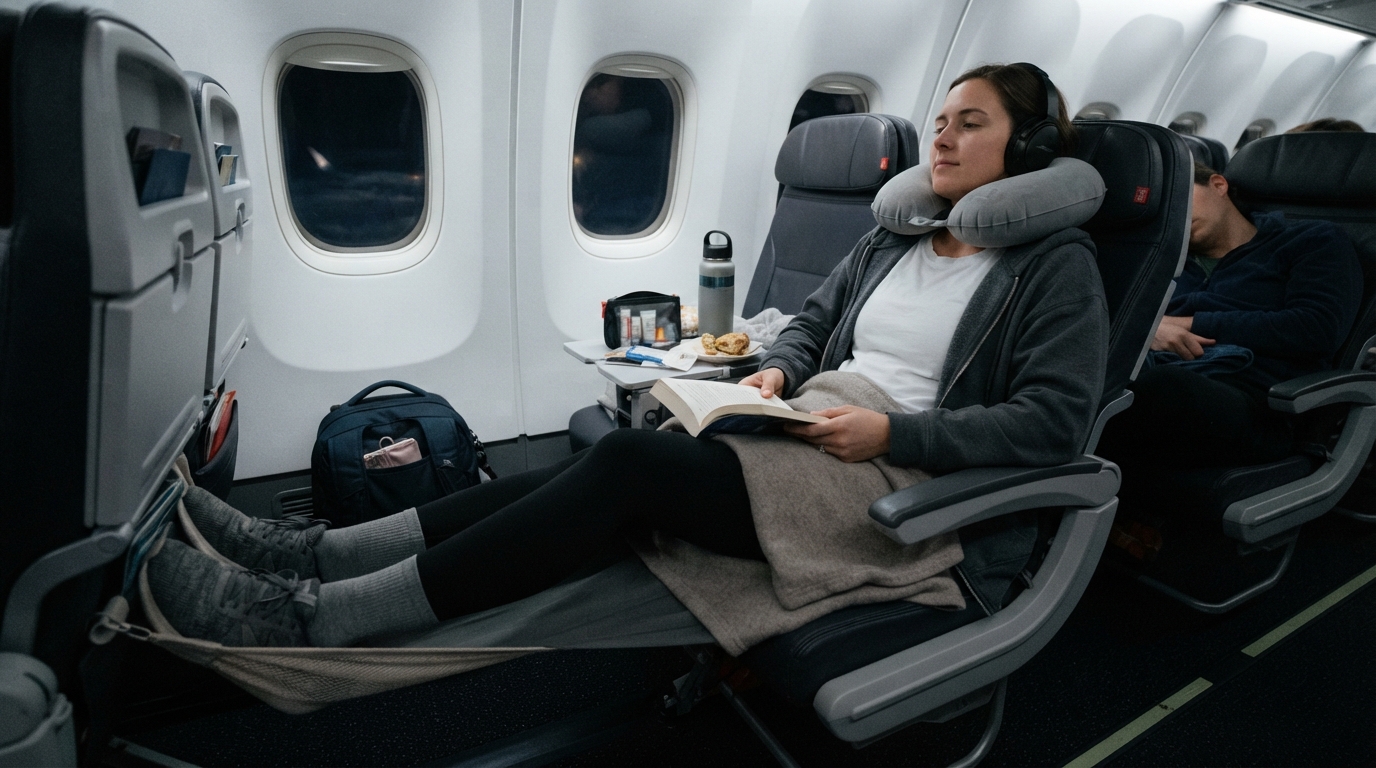
“Survive” might sound dramatic, but for some travelers, it’s exactly the right word. Very long international flights—15 hours or more—require a different mindset altogether.
Reframe Your Mindset
The single biggest shift experienced long-haul travelers make is accepting the journey rather than fighting it. You’re on a plane for 14 hours. That’s a block of time you can read, watch films, listen to podcasts, journal, sleep, or think. Viewing the flight as dead time creates resistance; viewing it as protected, screen-justified downtime changes everything.
Break the Flight into Mental Segments
A 14-hour flight feels less daunting when broken into phases:
- Hours 1–2: Settle in, eat dinner, watch a movie
- Hours 3–8: Sleep (target this block aggressively)
- Hours 9–11: Breakfast service, light entertainment, stretching
- Hours 12–14: Final movie or reading, prepare for arrival
Use Stopovers Strategically
If your flight includes a stopover, plan it wisely. A short layover of 1–2 hours is stressful; a longer layover of 6–8 hours can be an opportunity to shower, eat a real meal, and even sleep in an airport lounge or transit hotel. Many airports in Asia and the Middle East—Singapore’s Changi, Qatar’s Hamad, Dubai International—offer exceptional facilities specifically designed for long-haul transit passengers.
Know Your Airline’s Perks
Different airlines handle long-haul flying very differently. Singapore Airlines, Emirates, Qatar Airways, and Cathay Pacific are consistently ranked among the best for long-haul economy comfort. Knowing which airline you’re on and what they offer—snack bars, amenity kits, entertainment quality—lets you set expectations and plan accordingly.
Your Best Flight Starts Before You Board
Long-haul travel doesn’t have to be an ordeal. The passengers who arrive refreshed, oriented, and ready to explore aren’t just lucky—they planned. They packed the right things, chose the right seat, adjusted their sleep schedule, ate sensibly, drank water consistently, and showed up with a strategy rather than just a boarding pass.
The flight travel tips in this guide aren’t theoretical. They’re practical, proven approaches used by frequent international travelers, long-haul cabin crew, and travel health specialists. Apply even half of them on your next journey and the difference will be immediate.
Your destination is worth arriving well for. Start planning before the flight—and the flight takes care of itself.
Frequently Asked Questions
1. What are the most important flight travel tips for a long-haul journey?
The most impactful tips are: choose your seat deliberately, stay hydrated throughout the flight, wear compression socks, move every 1–2 hours, bring noise-canceling headphones, and begin adjusting your sleep schedule to your destination’s time zone before you depart.
2. How do I sleep on a long-haul flight in economy?
Use an eye mask and earplugs or noise-canceling headphones to block out light and noise. Recline your seat, use a memory foam neck pillow, and time your sleep to align with nighttime at your destination. Avoid caffeine and alcohol before your intended sleep window.
3. What is the best seat for a long-haul flight?
Exit row and bulkhead seats offer the most legroom. Window seats are best for uninterrupted sleep; aisle seats are best for frequent movers. Use SeatGuru.com to review your specific aircraft’s layout before selecting.
4. How do I avoid jet lag after a long international flight?
Expose yourself to natural light at the appropriate time for your new time zone, stay awake until local bedtime on arrival day, drink plenty of water, and adjust your sleep and meal schedule a few days before flying. Melatonin can also be effective, particularly for eastbound travel.
5. What should I pack in my carry-on for a long-haul flight?
Key items include: neck pillow, eye mask, earplugs, noise-canceling headphones, compression socks, moisturizer, lip balm, hand sanitizer, snacks, a reusable water bottle, portable charger, and downloaded entertainment. A change of clothes is valuable for very long journeys or connecting flights.
6. What should I eat before a long-haul flight?
Eat light, easily digestible foods—grilled protein, salads, fruit, or oatmeal. Avoid carbonated drinks, fried food, alcohol, excessive caffeine, and gas-producing foods like beans. Overeating before boarding significantly increases in-flight discomfort.
7. How do I stay healthy during a long-haul flight?
Wash your hands frequently, use a saline nasal spray to keep nasal passages moist, stay hydrated, move regularly to prevent DVT, and support your posture with a lumbar pillow. Get adequate sleep during the flight to support immune function.
8. Are compression socks actually necessary for long-haul flights?
Yes, particularly for flights over six hours. The WHO recognizes that prolonged immobility during long-haul travel increases DVT risk. Compression socks improve venous blood flow and measurably reduce swelling and the risk of blood clots in the legs.
9. What’s the best way to handle ear pressure during a long-haul flight?
Yawn, swallow, or chew gum during takeoff and landing. The Valsalva maneuver—gently pinching your nose and blowing softly—equalizes pressure effectively. If you have a head cold, use a decongestant nasal spray 30 minutes before descent.
10. What are the best airlines for long-haul economy comfort?
Singapore Airlines, Emirates, Qatar Airways, and Cathay Pacific are consistently rated among the top airlines for long-haul economy class, offering superior seat comfort, meal quality, entertainment systems, and cabin service on international routes.
