


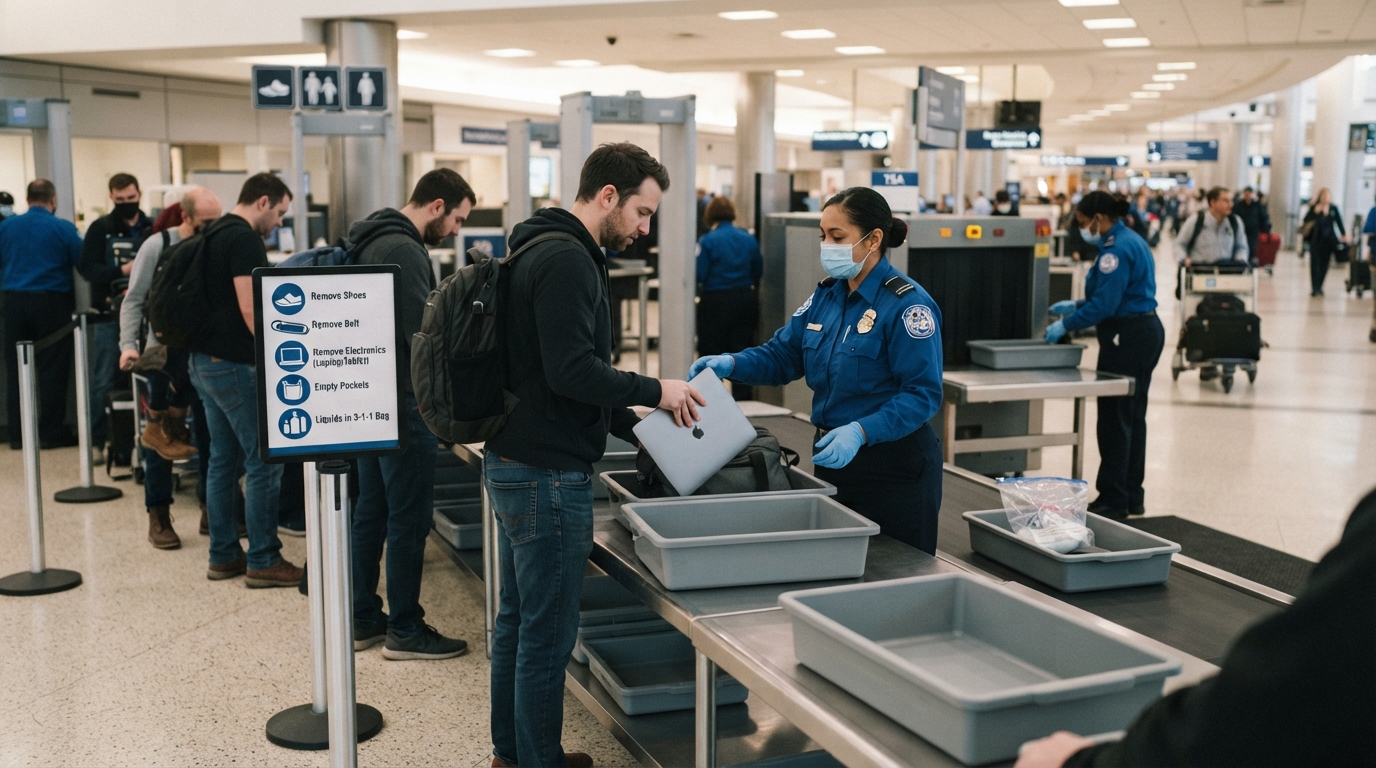
Air travel rules and regulations govern everything from what you pack to how you identify yourself at the airport. This guide covers TSA security rules, baggage policies, identification requirements, and international travel regulations—so you can move through any airport with confidence.
Flying can feel overwhelming, especially when the rules seem to change every time you book a ticket. One airline charges for carry-ons; another doesn’t. One country requires a visa; another lets you walk right through. A bottle of water gets confiscated at security while a full-size laptop sails through without a second glance. If you’ve ever stood at a security checkpoint wondering what you did wrong, you’re not alone.
The truth is, air travel rules and regulations aren’t arbitrary. They exist to protect passengers, crew, and the aircraft itself—and once you understand the logic behind them, they start to make a lot more sense. The challenge is that these rules come from multiple sources: federal agencies like the TSA, individual airlines, destination countries, and international aviation bodies. Navigating all of them at once is where travelers run into trouble.
This guide brings everything together in one place. You’ll learn what the TSA actually checks for, how to pack a bag that won’t get flagged, what ID you need at the gate, and what to expect when you’re flying internationally. Whether you’re a first-time flyer or a seasoned road warrior who’s tired of surprises, this is the resource you’ll want to bookmark.
What Are Air Travel Rules and Regulations—and Who Sets Them?
Air travel rules and regulations refer to the legal and procedural frameworks that govern commercial aviation. These rules determine how passengers board planes, what they can bring onboard, how airlines operate, and what security protocols airports must follow.
In the United States, the primary regulatory bodies include:
- The Transportation Security Administration (TSA): Handles passenger and baggage screening at U.S. airports.
- The Federal Aviation Administration (FAA): Oversees aircraft safety, pilot certification, and airspace management.
- U.S. Customs and Border Protection (CBP): Manages international arrivals and departures.
- Individual airlines: Set their own policies for baggage fees, boarding procedures, and in-flight conduct within the bounds of federal law.
Internationally, the International Civil Aviation Organization (ICAO)—a United Nations agency—establishes global standards that member countries adopt and adapt.
Understanding who sets which rules helps you know where to look when you have a question. A dispute about checked baggage fees goes to the airline. A question about what you can bring through security goes to the TSA. A question about entry requirements for a foreign country goes to that country’s embassy or official government website.
TSA Air Travel Rules: What Every Passenger Needs to Know
How does TSA airport security screening work?
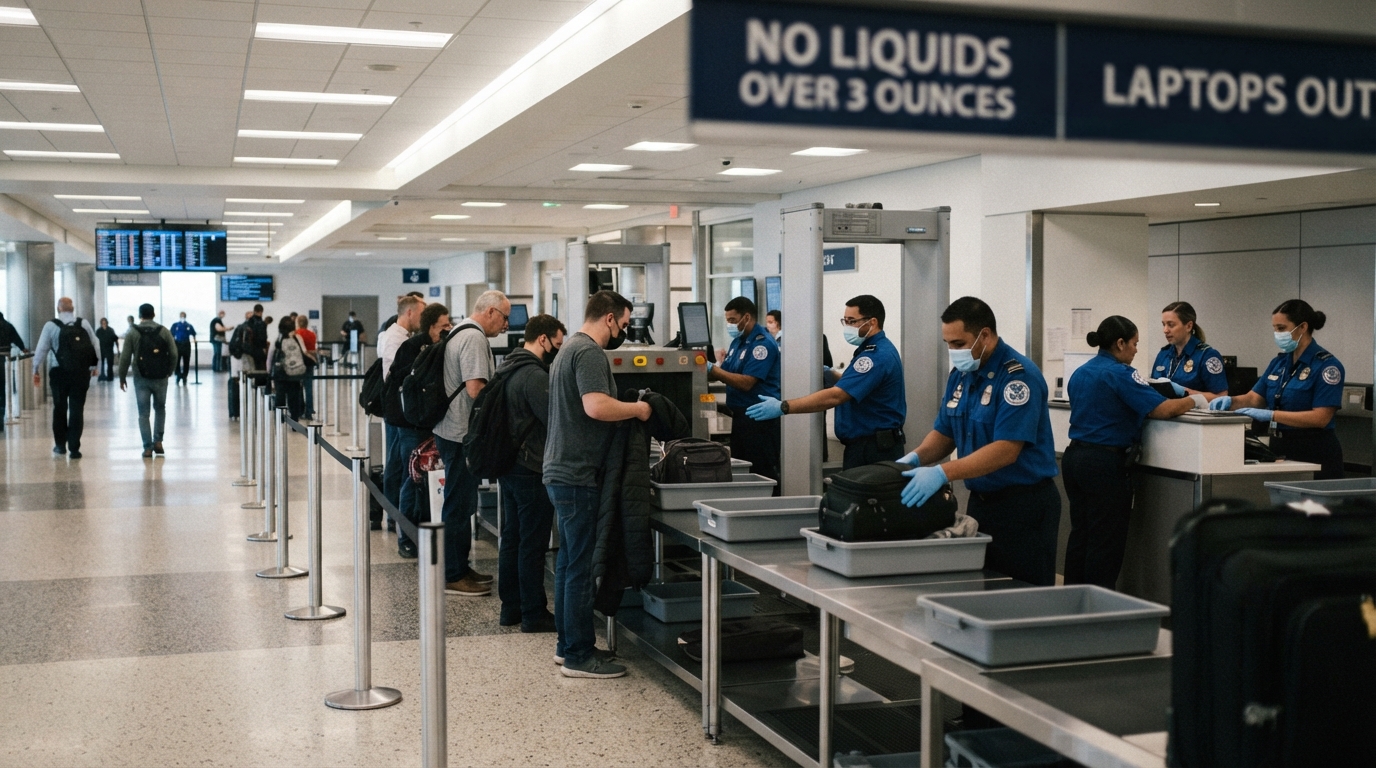
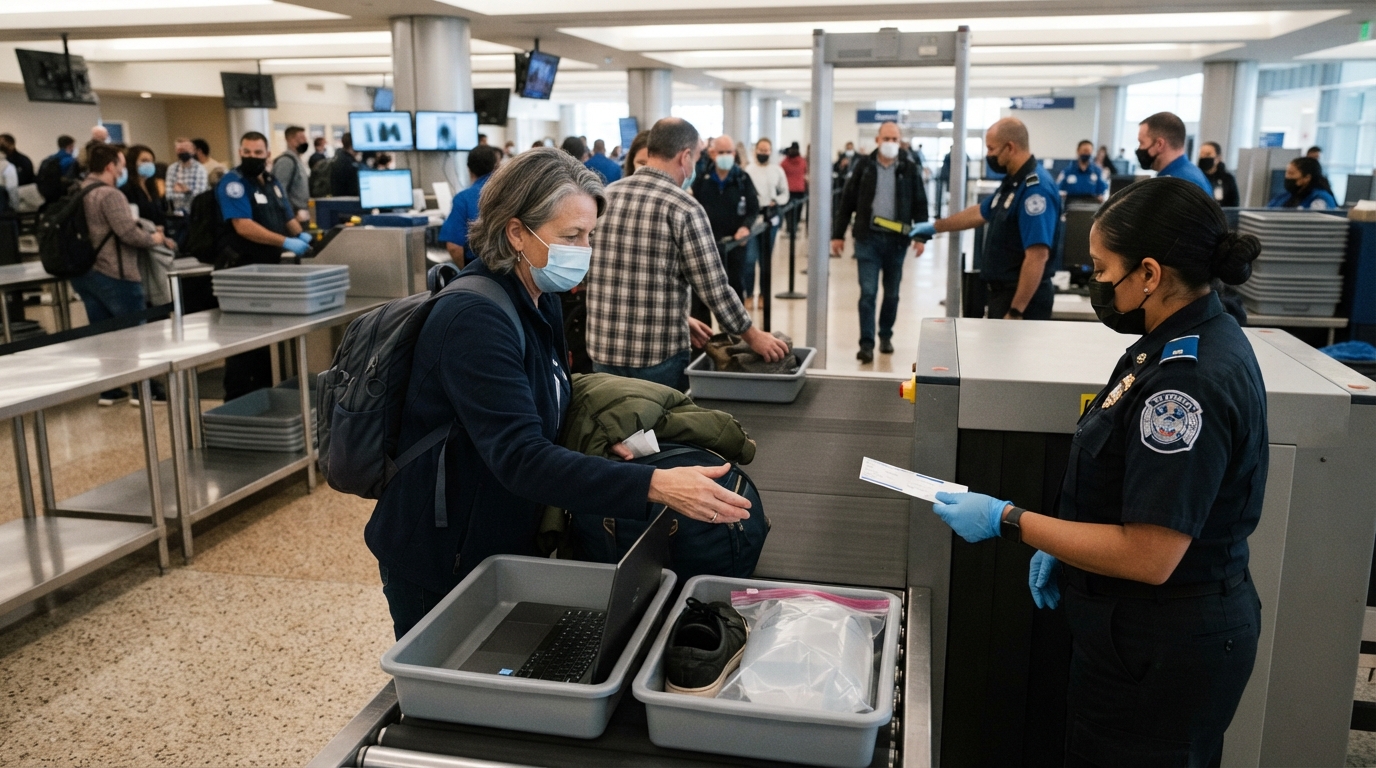
The TSA’s job is to prevent prohibited items from getting onto aircraft. When you reach a security checkpoint, you’ll pass through one of several screening systems: a walk-through metal detector, a millimeter-wave body scanner, or both. Your carry-on bags go through an X-ray machine, and in some airports, a CT scanner that produces a 3D image of your bag’s contents.
Here’s what happens step by step:
- Show your boarding pass and ID to a TSA officer.
- Place your carry-on, shoes, belt, and electronics in a bin.
- Walk through the screening machine.
- Collect your belongings and proceed to your gate.
TSA PreCheck members can keep their shoes and belts on and leave laptops and liquids in their bags, which significantly speeds up the process.
What are the TSA liquid rules for carry-on bags?
One of the most commonly misunderstood air travel security rules is the liquids rule—officially known as the 3-1-1 rule:
- Liquids, gels, aerosols, creams, and pastes must be in containers of 3.4 ounces (100 milliliters) or less.
- All containers must fit in one quart-sized, clear, zip-top bag.
- Each passenger is allowed one such bag.
This rule applies to items like shampoo, toothpaste, sunscreen, and even peanut butter (yes, it counts as a gel). Full-size bottles—even if mostly empty—will be confiscated.
Exceptions include:
- Prescription medications (must be declared)
- Baby formula and breast milk
- Medically necessary liquids
These can exceed 3.4 ounces but may require additional screening.
What items are prohibited on airplanes?
The TSA maintains an extensive list of prohibited items. Some are obvious; others catch travelers off guard.
|
Category |
Prohibited in Carry-On |
Allowed in Checked Baggage |
|---|---|---|
|
Firearms |
No (unless unloaded, declared) |
Yes (unloaded, locked case) |
|
Knives (over 2.36 in.) |
No |
Yes |
|
Lithium batteries (large) |
No |
No |
|
Fireworks/explosives |
No |
No |
|
Pepper spray |
No |
Yes (limited quantity) |
|
Alcohol (over 140 proof) |
No |
No |
|
Alcohol (24–70% ABV) |
No |
Yes (5 liters max) |
|
Tools over 7 inches |
No |
Yes |
When in doubt, use the TSA’s “Can I Bring?” tool at tsa.gov. You type in any item and get an instant answer.
Airline Baggage Rules and Regulations: Checked and Carry-On
What are the standard carry-on baggage rules?
Carry-on baggage rules vary by airline, but most U.S. carriers follow similar size and weight guidelines. A typical carry-on must fit in the overhead bin and not exceed dimensions of approximately 22 x 14 x 9 inches (including wheels and handles). Most airlines allow one carry-on bag plus one personal item (a backpack, purse, or laptop bag) per passenger at no extra charge—though budget carriers like Spirit and Frontier charge fees for overhead bin bags.
Key carry-on rules to remember:
- Laptops must usually be removed and placed in a separate bin during screening.
- Power banks and lithium batteries must go in carry-on, not checked luggage.
- Fragile or valuable items are better kept in carry-on than checked bags.
What are the checked baggage weight and size limits?
Most major U.S. airlines allow checked bags up to 50 pounds (23 kg) and 62 linear inches (length + width + height combined). Going over these limits triggers overweight or oversized bag fees, which can range from $30 to $200 or more per bag depending on the airline and how far over the limit you are.
Standard checked baggage fees for the first bag on domestic U.S. flights currently range from $30 to $40 on carriers like American, Delta, and United. Southwest Airlines remains an outlier, still offering two free checked bags per passenger.
What items are restricted in checked baggage?
Not everything can go in the hold. The following are commonly restricted or prohibited in checked baggage:
- Lithium-ion batteries (including spare laptop batteries and power banks): Must go in carry-on.
- E-cigarettes and vaping devices: Must be in carry-on.
- Flammable liquids and gases: Prohibited entirely.
- Dry ice: Allowed in limited quantities (under 5.5 lbs) with airline approval.
Always check your specific airline’s baggage policy before you pack, as rules can differ—especially on international routes.
Air Travel Identification Requirements
What ID do you need to fly domestically in the United States?
As of May 7, 2025, the REAL ID Act is fully enforced for domestic air travel in the United States. This means your driver’s license or state ID must be REAL ID-compliant—marked with a star in the upper corner—to be accepted at TSA checkpoints.
If your ID is not REAL ID-compliant, you’ll need to present an alternative acceptable form of identification, such as:
- A U.S. passport or passport card
- A DHS-trusted traveler card (Global Entry, NEXUS, SENTRI)
- A U.S. military ID
- A permanent resident card
Children under 18 are not required to show ID when traveling with an adult on domestic flights.
What documents do you need for international flights?
International air travel rules require a valid passport for virtually all destinations outside the United States. Your passport must typically be valid for at least six months beyond your travel dates, though this varies by country.
Additional documentation may include:
- Visas: Required for entry into many countries. U.S. citizens can check requirements at travel.state.gov.
- Electronic Travel Authorizations (ETAs): Countries like Canada, Australia, and the UK require these for visa-exempt travelers. They’re quick to obtain online but must be done before departure.
- Proof of onward travel: Many countries require a return or onward ticket before allowing entry.
- Vaccination records: Some destinations require proof of specific vaccinations (e.g., yellow fever).
International Air Travel Rules: What Changes When You Cross a Border
What are the customs and declaration rules for international arrivals?
When returning to the United States from abroad, every traveler must complete a U.S. Customs declaration form. You’re required to declare:
- All goods purchased or acquired abroad
- Currency or monetary instruments totaling $10,000 or more
- Food, plants, and animal products
U.S. residents returning from international trips are entitled to an $800 duty-free exemption per person. Items beyond this threshold may be subject to import duties.
Failing to declare items can result in fines, confiscation, or even legal penalties—so when in doubt, declare it.
What are the rules for flying with food internationally?
Many travelers are surprised to learn that bringing food across international borders is heavily regulated. The U.S. Department of Agriculture (USDA) and CBP restrict the importation of:
- Fresh fruits and vegetables (with few exceptions)
- Meat and poultry products from many countries
- Dairy products from some regions
- Soil and live plants (without a permit)
Commercially packaged, shelf-stable foods are generally permitted. Fresh, unpackaged foods are far more restricted. Check the USDA’s APHIS website for a full list of what’s allowed from each country.
What are the rules for flying with medications internationally?
Travelers carrying prescription medications internationally should:
- Keep medications in their original labeled containers.
- Carry a copy of the prescription or a letter from their physician.
- Check the destination country’s regulations—some medications legal in the U.S. are controlled substances elsewhere (e.g., Adderall is banned in Japan).
- Declare medications as required on customs forms.
Airport Security Rules for Travelers With Special Needs
What accommodations does TSA offer for passengers with disabilities?
The TSA provides several accommodations for passengers with disabilities, medical conditions, or special circumstances:
- TSA Cares: A helpline (1-855-787-2227) that helps passengers with disabilities prepare for screening before they travel.
- Separate screening rooms: Available upon request for those who prefer privacy.
- Pat-down alternatives: Officers are trained to work with prosthetics, mobility aids, and medical devices.
- Notification cards: Passengers can present a TSA notification card explaining their condition without having to verbally disclose it.
Passengers traveling with service animals should notify the airline in advance and be prepared for the animal to be screened separately from its handler.
Rules for Flying With Children and Infants
What are the TSA rules for traveling with infants and young children?
Traveling with little ones comes with its own subset of air travel security rules. Key guidelines include:
- Car seats and strollers can be checked at the gate for free on most airlines and must go through X-ray screening.
- Baby formula, breast milk, and juice are exempt from the 3-1-1 liquids rule. Quantities over 3.4 oz are allowed and may be tested with additional screening.
- Children under 12 can leave their shoes on during TSA screening.
- Lap infants (under 2 years) can fly without a separate ticket on domestic U.S. flights, though the FAA recommends using an approved child safety seat.
In-Flight Rules and Conduct Regulations
What are the rules passengers must follow during a flight?
Once onboard, passengers are subject to FAA regulations and the airline’s own conduct policies. Standard in-flight rules include:
- Seatbelts must be worn whenever the seatbelt sign is illuminated.
- Electronic devices must be in aeroplane mode during takeoff and landing (some airlines permit full use of Wi-Fi throughout the flight).
- Smoking—including e-cigarettes—is prohibited on all U.S. commercial flights.
- Tampering with smoke detectors in lavatories is a federal offense.
- Unruly or violent behavior toward crew or other passengers is a federal crime and can result in fines up to $37,000 or criminal prosecution.
Flight attendants have the authority to enforce these rules and can divert the aircraft in serious situations.
Tips for Navigating Air Travel Rules More Easily
Knowing the rules is one thing. Applying them smoothly at the airport is another. Here are practical strategies that make compliance less stressful:
- Enroll in TSA PreCheck or Global Entry. TSA PreCheck costs $78 for five years and removes most of the friction from domestic security. Global Entry ($100 for five years) adds expedited U.S. customs clearance for international travelers.
- Pack a dedicated liquids bag. Keep a pre-packed quart-size bag of toiletries ready to drop into your carry-on the night before you fly.
- Use the TSA app or website. The “What Can I Bring?” tool is fast and accurate. Check before you pack, not at the checkpoint.
- Check your ID’s REAL ID status now. Don’t wait until you’re at the airport to find out your license isn’t compliant.
- Research entry requirements 30 days before departure. Visa and ETA requirements can change, and processing times vary.
- Take a photo of your checked bag before you check it. If your bag is lost or damaged, having a photo helps with the claims process.
Final Thoughts: Travel Smarter by Knowing the Rules
The gap between a smooth flight and a frustrating one is often just preparation. Air travel rules and regulations aren’t designed to slow you down—they’re designed to keep everyone safe. But they only work in your favor when you understand them in advance.
Start with the basics: know your ID requirements, pack your liquids properly, and check your airline’s baggage policy before you print your boarding pass. For international trips, verify your passport’s validity and any visa or ETA requirements weeks ahead of time. The more you know before you arrive at the airport, the more of your energy you can spend on the actual trip.
Frequently Asked Questions About Air Travel Rules and Regulations
What are the most important air travel rules to know before flying?
The most critical air travel rules cover three areas: identification (knowing whether your ID is REAL ID-compliant or whether you need a passport), security screening (the TSA’s 3-1-1 liquids rule and prohibited items list), and baggage policies (your airline’s size, weight, and fee structure for both carry-on and checked bags). Familiarizing yourself with these three areas will eliminate the majority of travel-day surprises.
What qualifies as a personal item versus a carry-on bag?
A personal item is a smaller bag—typically a purse, backpack, or laptop bag—that fits under the seat in front of you. A carry-on is a larger bag that goes in the overhead bin. Most airlines allow one of each per passenger without charge, though budget airlines often charge for the overhead bin bag. Exact dimensions vary by carrier, so check your airline’s policy before packing.
Can you bring food through TSA security?
Yes, solid food items are generally allowed through TSA checkpoints in both carry-on and checked bags. Liquid or gel-like foods (soups, yogurt, peanut butter, jam) are subject to the 3-1-1 liquids rule in carry-on bags. Bringing food across international borders is subject to customs regulations, which are much stricter.
What happens if TSA finds a prohibited item in your bag?
If TSA finds a prohibited item during screening, they will confiscate it. For certain items—firearms, large quantities of prohibited substances—there may be additional consequences, including law enforcement involvement. For minor violations, the item is simply removed and either discarded or held. You will not typically miss your flight over a forgotten tube of oversized toothpaste.
Do I need a REAL ID to fly domestically in the U.S.?
As of May 7, 2025, yes. Your driver’s license or state-issued ID must be REAL ID-compliant (marked with a star) to serve as acceptable identification at TSA checkpoints. If your ID is not compliant, you’ll need a U.S. passport, passport card, or another federally accepted form of identification.
What is TSA PreCheck and is it worth it?
TSA PreCheck is a trusted traveler program that allows pre-approved passengers to use dedicated, expedited security lanes at U.S. airports. Members keep their shoes, belts, and light jackets on, and don’t need to remove laptops or liquids from their bags. The program costs $78 for a five-year membership. For anyone who flies domestically two or more times per year, the time savings and reduced stress make it a worthwhile investment.
Are international air travel rules the same in every country?
No. Each country sets its own entry requirements, customs rules, and airport security procedures. While many countries follow ICAO standards, specific visa requirements, duty-free allowances, and prohibited import items vary widely. Always check the official government website of your destination country—or consult your country’s foreign affairs ministry—at least 30 days before departure.
